
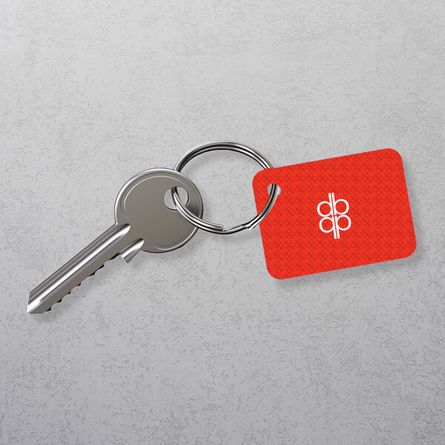
Most marketing materials get glanced at and thrown away. Plastic cards and key tags do not. They go into wallets, onto keyrings, and into bags where they stay for months or years. Every time a customer reaches for their keys or opens their wallet, your brand is right there. If you are running a loyalty program, membership scheme, gift card campaign, or simple brand awareness push, these two formats deliver consistent daily exposure that printed flyers and digital ads simply cannot match.
Why Plastic Cards Belong in Your Marketing Mix
Plastic cards outperform paper-based marketing on every practical measure that matters for repeat brand contact and customer retention.
Durable Mini Billboards Customers Actually Keep
A paper flyer has a lifespan measured in hours. A plastic card lasts for years. It is waterproof, tear-resistant, and holds its print quality through daily handling in wallets and pockets. As a result, every card you issue continues to represent your brand long after the initial distribution cost has been absorbed.
The physical weight and finish of a plastic card also communicate quality. Customers keep things that feel valuable and discard things that feel disposable. Plastic cards consistently fall into the first category.
Everyday Uses Across Multiple Business Types
Plastic cards serve a wide range of practical marketing functions. Here is where they deliver the strongest results:
- Loyalty cards that reward repeat visits and increase average customer lifetime value
- Membership cards that give holders a sense of belonging and exclusive access
- Gift cards that drive new customer acquisition when recipients visit for the first time
- VIP cards that reward high-value customers and encourage continued spending
- Access and ID cards for staff, members, or event attendees requiring verification
Each of these formats puts your brand directly into the customer’s daily routine rather than sitting in an inbox or on a noticeboard.
Why Key Tags Work So Well for Brand Recall
Key tags are smaller than a standard card, but they occupy some of the most visible real estate a customer carries with them every day.
Always Visible on Keys, Bags, and Lanyards
A key tag attached to a customer’s keys is seen multiple times every single day. Unlike a card tucked in a wallet, a key tag is visible to the customer and to everyone around them, creating passive brand exposure with every use. Key tags on gym bags, backpacks, and lanyards extend that visibility into public spaces where they function as miniature brand ambassadors.
Perfect for Rewards, Check-In, and Quick Identification
Key tags scan at the point of sale, making them ideal for high-traffic environments where speed matters. Here is where key tags perform best:
- Retail loyalty programs where quick scanning at checkout is a priority
- Gym and fitness membership check-in systems with barcode or magnetic stripe scanning
- Library, club, and community membership programs requiring frequent identification
- Pet registration and veterinary programs where owner identification is needed
- Car wash, parking, and subscription service memberships with regular repeat visits
The convenience of a key tag increases the likelihood that customers actually use the program they signed up for, which directly improves program engagement rates.
Card and Key Tag Combos: Double the Exposure
Issuing a matching card and key tag together is one of the most cost-effective ways to maximize brand contact points with a single customer.
One Design, Two Touchpoints
A coordinated card and key tag set gives customers the choice of how they carry your brand. Some prefer the wallet card. Others find the key tag more convenient. Offering both means your brand travels with the customer regardless of their personal preference. The design consistency across both formats reinforces brand recognition every time either item is used.
Popular Uses Across Industries
Card and key tag combos work particularly well in these settings:
- Gyms and fitness studios where members visit multiple times per week
- Retail stores running points-based loyalty programs with frequent transactions
- Schools and educational institutions issuing student or library membership sets
- Salons and beauty businesses are managing appointment-based loyalty rewards
- Nonprofits and community organizations issuing membership packages to supporters
The combined format increases the perceived value of membership or enrollment, which supports both acquisition and retention across all of these contexts.
Built-In Tracking and Data for Smarter Marketing
Plastic cards and key tags are not just physical marketing tools. When encoded correctly, they become data collection instruments that feed directly into your marketing and sales analytics.
Barcodes, Magstripes, and Variable Data
Cards and key tags can be produced with barcodes, QR codes, magnetic stripes, or smart chip encoding, depending on the system they need to integrate with. Variable data printing allows each card to carry unique member numbers, names, or codes that link directly to individual customer records in your database.
This means every scan at the point of sale generates a data point that can be analyzed to understand customer behavior, visit frequency, average spend, and program engagement over time.
What You Can Measure
Here is what a properly encoded card or key tag program allows you to track:
- Number of visits per member within any given time period
- Average transaction value for loyalty program members versus non-members
- Redemption rates on rewards and promotions issued to cardholders
- Member segments based on spending behavior, visit frequency, or product preferences
- Drop-off points where members stop engaging, so retention campaigns can be targeted
Your card program stops being a cost center and becomes a source of actionable customer intelligence that improves the precision of every subsequent marketing decision.
Design Features That Make Your Cards Work Harder
The design of a plastic card or key tag directly affects how long it gets kept and how much attention it receives during daily use.
Personalization Options
Personalized cards perform better than generic ones because customers are less likely to discard something that has their name on it. Here are the personalization options available:
- Member names are printed individually on each card for a premium feel
- Unique membership numbers linked to customer records in your system
- Photo ID panels for cards requiring visual identification of the holder
- Signature panels for cards used in financial or contractual contexts
- Sequential numbering for limited edition or collector-style campaigns
Shapes, Finishes, and Special Features
Standard CR80 cards suit most programs, but specialty options create stronger brand differentiation. Frosted and clear cards work well for premium or minimalist brand aesthetics. Die-cut shapes create memorable formats that stand out from standard wallet cards. Embossing adds a tactile element that reinforces the premium positioning of membership or VIP programs. Foil stamping draws attention to key brand elements like logos or tier indicators.
Campaign Ideas Using Plastic Cards and Key Tags
The physical format is only as effective as the campaign strategy behind it. Here are three campaign approaches that consistently deliver measurable results.
Launching or Revamping a Loyalty Program
A new loyalty program launch is the most common use case for plastic card and key tag production. Issue matched sets at the point of enrollment, tie the card to a digital account for cross-channel tracking, and communicate the program benefits clearly on the card itself or in the accompanying materials. Revamping an existing program with new card designs signals a refresh to existing members and creates a natural re-enrollment moment.
Gift Card, Referral, and Limited-Time Promo Campaigns
Gift cards drive new customer acquisition because the recipient is often someone who has not visited before. Referral cards issued to existing members with a unique code encourage word-of-mouth growth with a trackable mechanism attached. Limited-time promotional cards with expiry dates create urgency and drive visits during specific windows, such as seasonal campaigns or slower trading periods.
Conclusion
Plastic cards and key tags are among the most cost-effective physical marketing tools available when they are designed, encoded, and deployed as part of a structured program. They create daily brand contact, drive measurable customer behavior, and generate data that improves every subsequent marketing decision.
Duracard produces plastic cards and key tags built for exactly this kind of marketing work. Every order is printed to professional specification, encoded to your system requirements, and delivered with the quality and consistency that a customer-facing program demands. From loyalty and membership cards to gift cards and key tag combos, the team at Duracard handles the full production process so your brand lands in customers’ hands looking exactly the way it should.
When the card represents your brand, this brand makes sure it does the job properly.